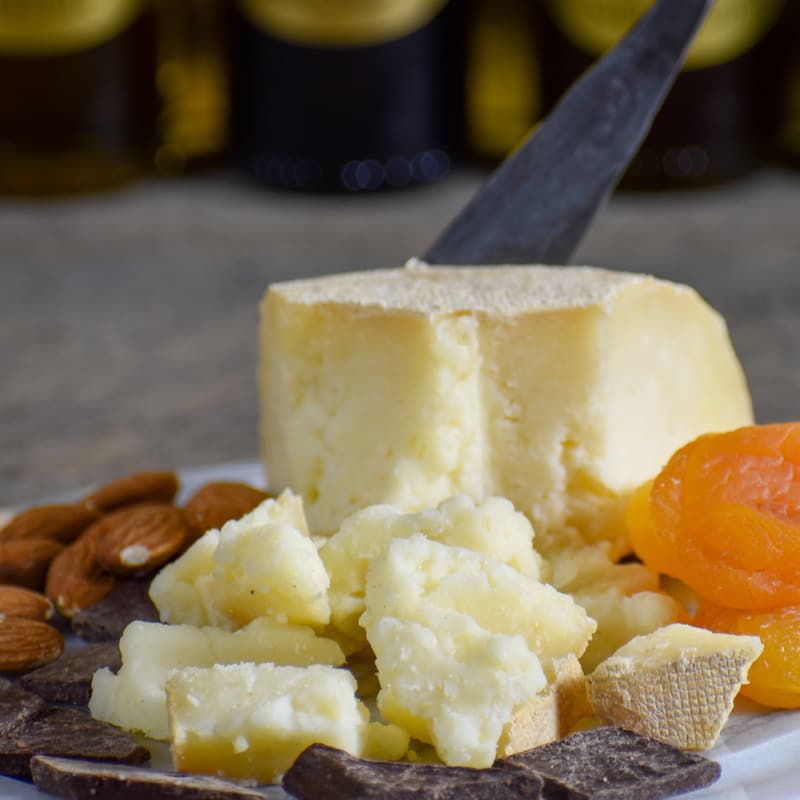

Artisan cheese, made by hand
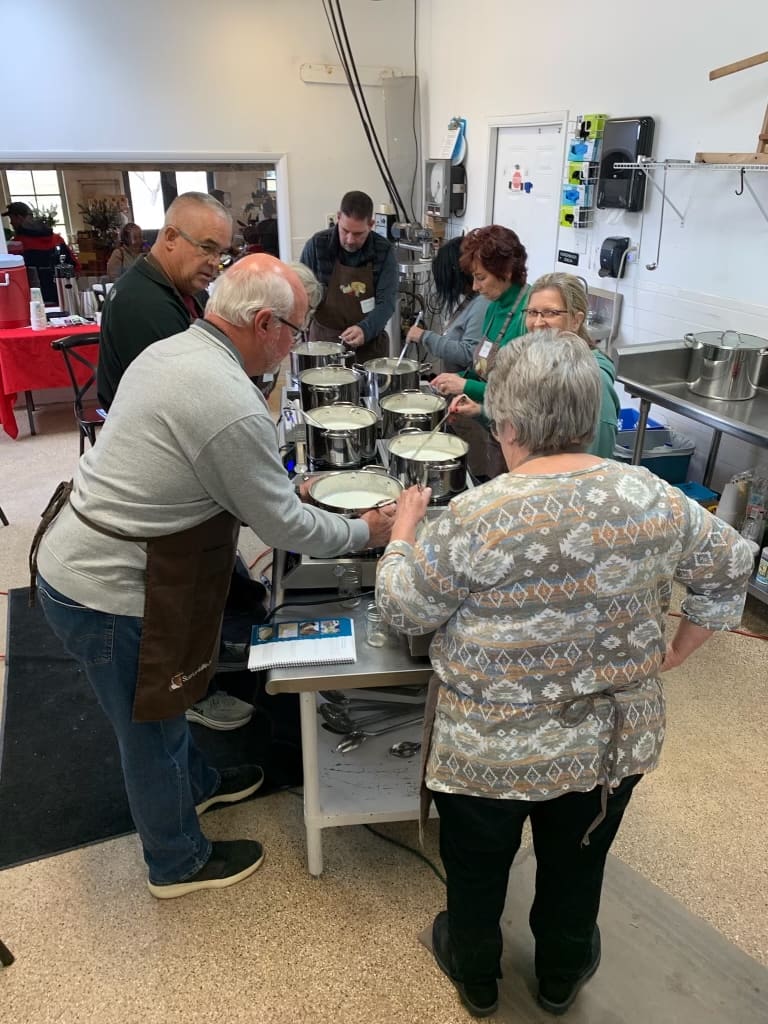
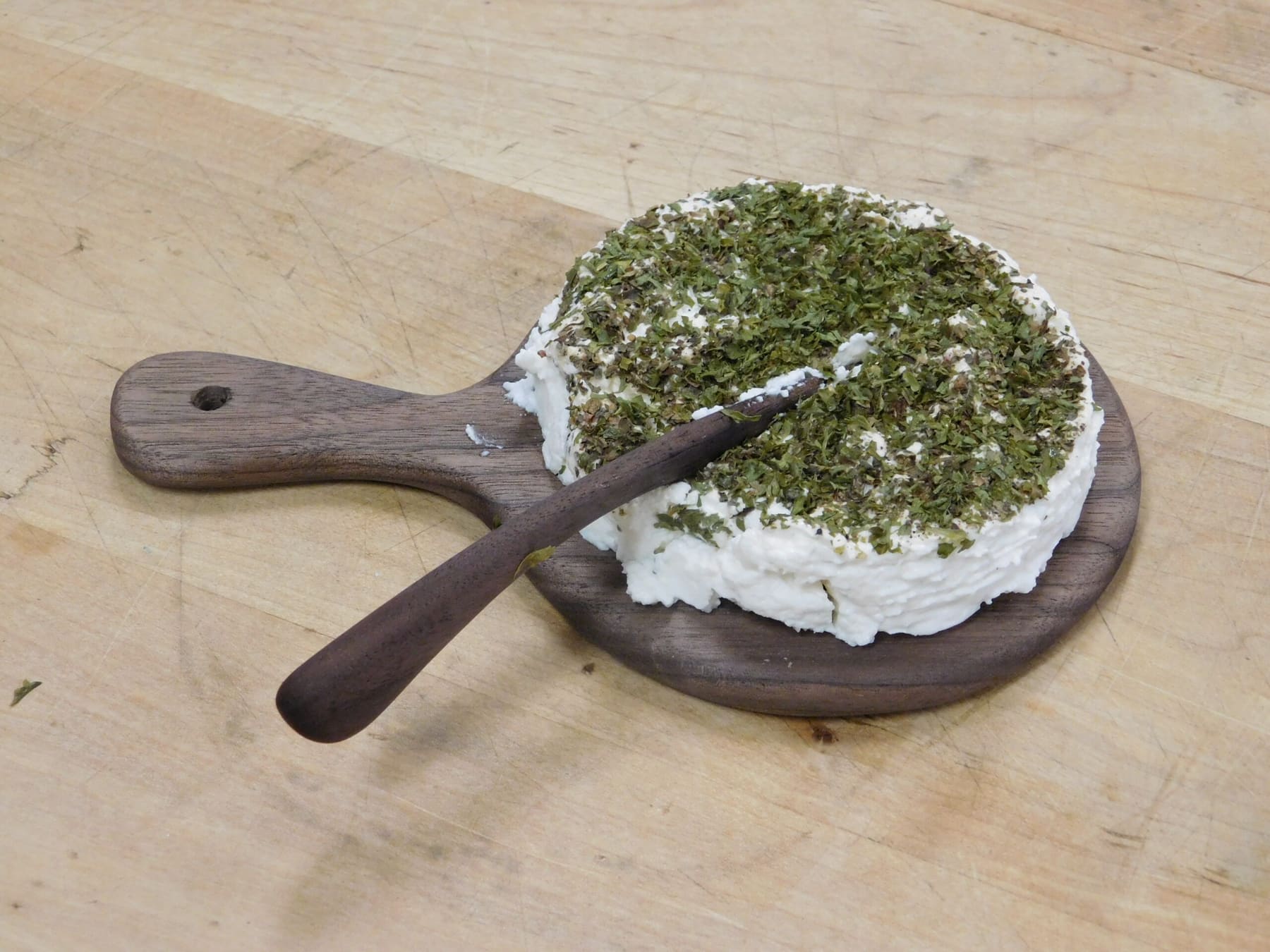
"Artisan cheese" means cheese made in small batches, mostly by hand, by people who know every step. It's the only way this family has ever made cheese. Rebeccah Salmeri started with a four-gallon pot in 1999. Brazos Valley Cheese started on Halbert Lane in 2005 with a single 36-gallon kettle and grew into 200-gallon batches, and the process stayed hands-on from milk to cave. Today we carry cheese from a few trusted artisan creameries, including Rebeccah's Brush Creek Creamery in Idaho, while we prepare to make cheese in Waco again.
Step 1: Start with great milk
Cheese can only be as good as its milk, and this cheese starts with rich milk from Jersey cows. Jersey milk is high in butterfat and protein, so it makes richer, creamier cheese and a higher yield of curd. Milk from grass-fed cows also carries more omega-3 fatty acids and CLA, and the seasons show up in the cheese: spring grass gives a deeper golden color and a brighter, grassier flavor.
Step 2: Culture and set the milk
The cheesemaker gently warms the milk and adds starter cultures, friendly bacteria that turn milk sugar into lactic acid and build flavor. Then comes rennet, which sets the milk into a soft, custard-like curd. Different cultures and temperatures are what make a Cheddar a Cheddar and a Gouda a Gouda.
Step 3: Cut, cook and stir the curd
Once the curd is set, it's cut into small pieces with curd knives. Smaller pieces release more whey and make a drier, harder cheese; larger pieces make a softer one. Then the curds are slowly warmed and stirred by hand, with the cheesemaker watching and feeling for the moment they're ready.
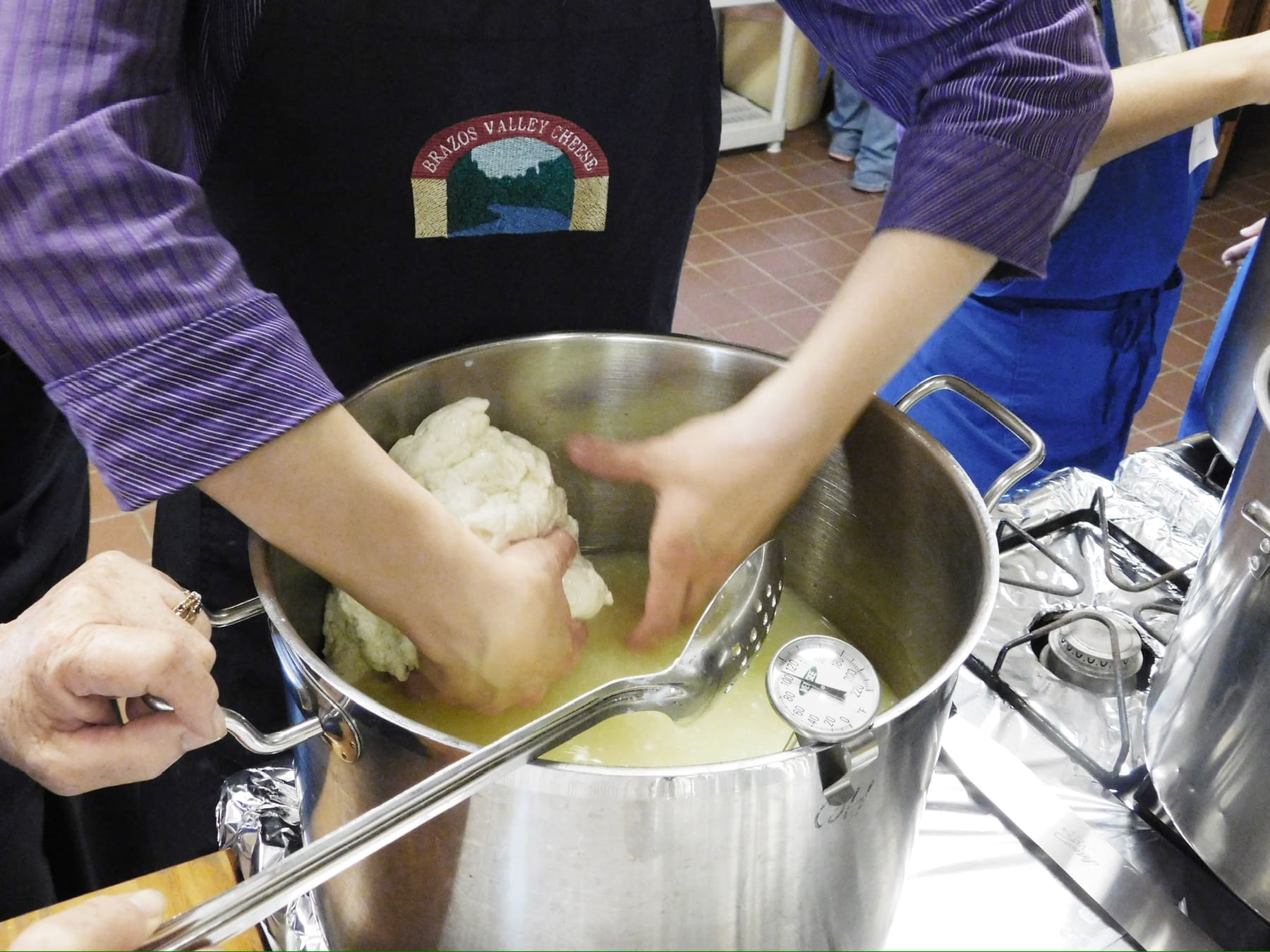
Step 4: Drain, mold and press
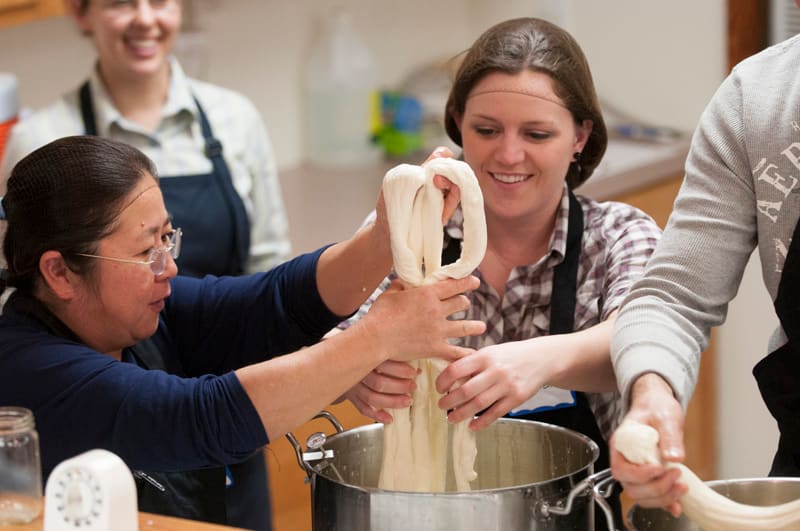
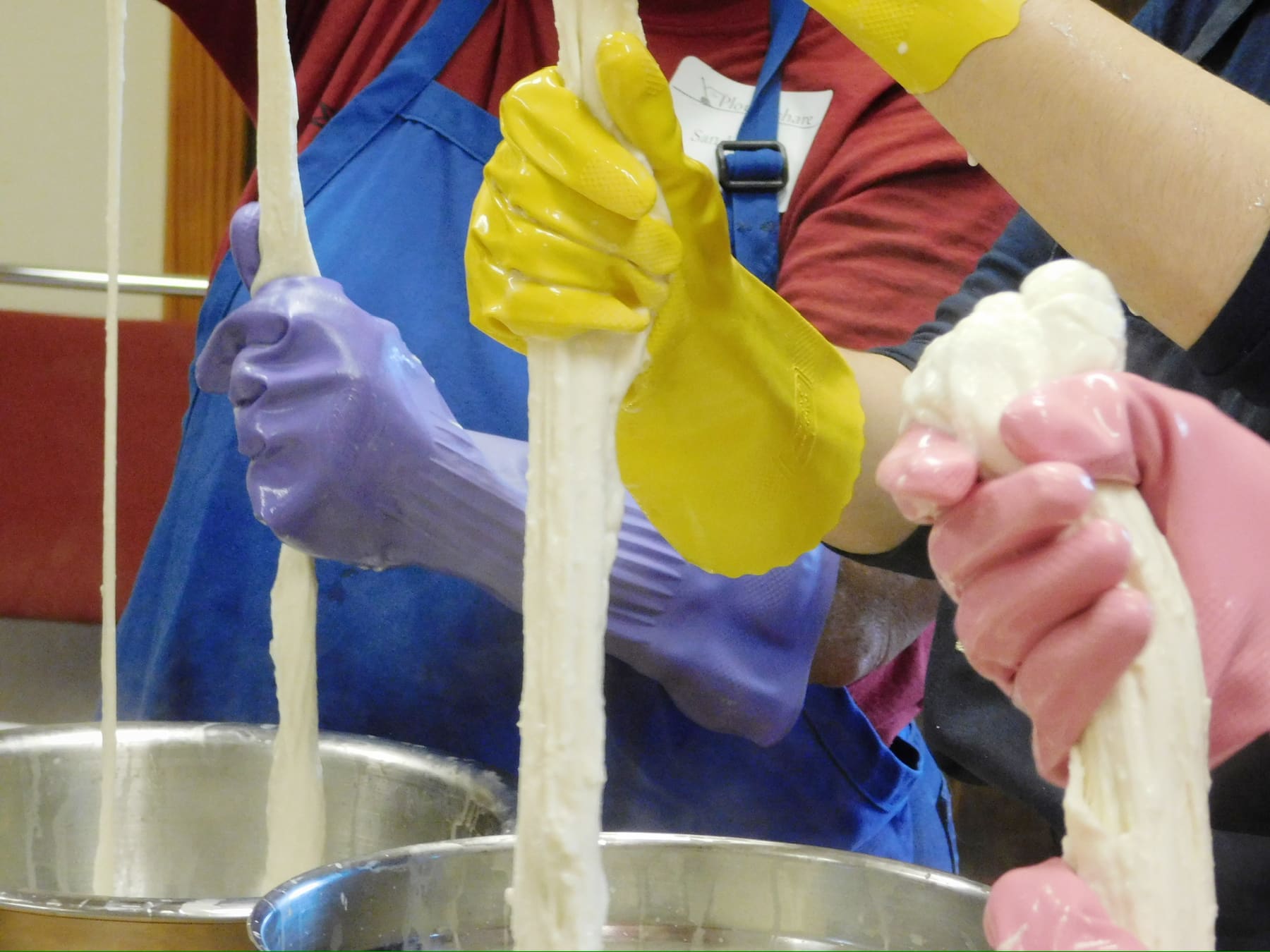
The whey is drained off and the curd goes into molds. For Cheddar, the curd is first cheddared: slabs are stacked and turned to press out more whey and build its dense texture. Hard cheeses go into the cheese press for hours, and soft cheeses like Brie drain under their own weight. Mozzarella takes a different path: the curd is kneaded and stretched in hot water until it turns smooth and glossy.
Step 5: Salt
Salt seasons the cheese, draws out moisture and protects it as it ages. Depending on the cheese, the curd is salted directly, salt is rubbed onto the rind, or the wheels float in a brine bath.
Step 6: Age in the cave
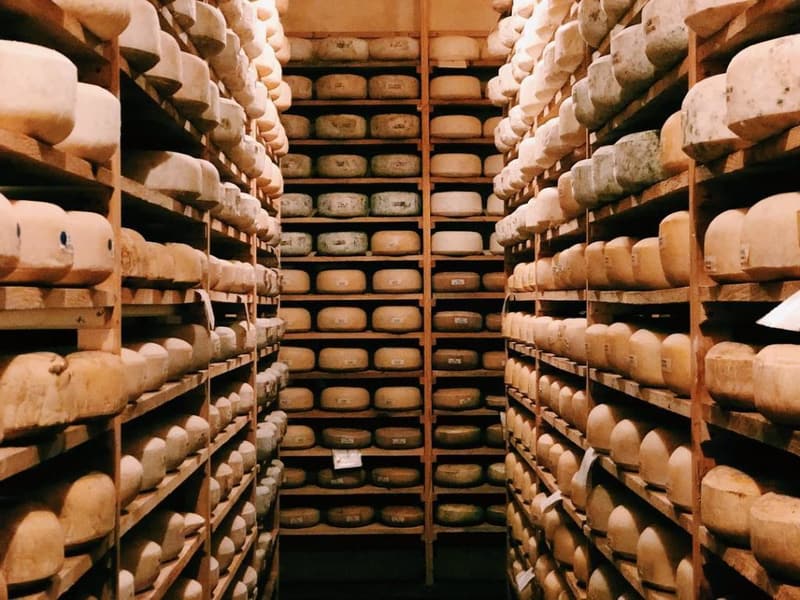
Finally, the cheese goes into the cheese cave, where hard cheeses age for at least sixty days, and Parmesan for two to three years or more. Some wheels are wrapped in cloth, some in fig leaves or mesquite, and some develop natural rinds. This is where most of the flavor is made.
Nothing artificial
No artificial flavors, no preservatives, no artificial colors. Orange Cheddar gets its color from annatto, a natural seed extract, and white Cheddar has nothing added at all.
Award-winning results
This way of making cheese has earned ribbons at the American Cheese Society, the most important cheese judging in North America, for both Brazos Valley Cheese and Brush Creek Creamery.
Make it yourself in 2027
In early 2027 we're opening hands-on cheesemaking classes for individuals and couples on Halbert Lane in Waco. Get notified about classes.
Taste it
Read our cheese care FAQ, visit the shop on Halbert Lane, or call (254) 723-4777 to order by phone. We ship.