
If you buy raw-milk cheese in the United States, it has been aged at least sixty days. That's not a coincidence. It's federal law, and it has shaped American cheesemaking for decades.
What is raw-milk cheese?
Raw-milk cheese is made from milk that hasn't been pasteurized (heated to kill bacteria). Many cheesemakers prefer raw milk because it carries more of the milk's natural character: the breed of cow, what the cows ate, even the season. Many of the world's most famous cheeses are traditionally made from raw milk.
The 60-day rule
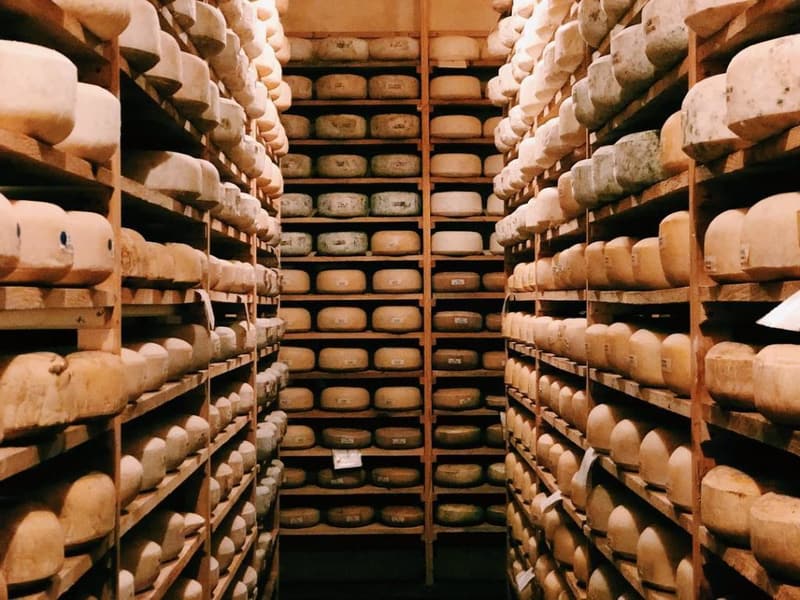
U.S. Food and Drug Administration standards require cheese made from unpasteurized milk to be aged at least 60 days, at a temperature of at least 35°F, before it can be sold. The idea is that during aging, the cheese's acidity, salt and drying make it a poor home for harmful bacteria.
That's why you won't find fresh raw-milk cheeses like raw-milk mozzarella or ricotta for sale in the U.S. Fresh cheeses are made from pasteurized milk.
What 60 days does for flavor
Sixty days is the legal minimum, not the finish line. Aging is where cheese develops most of its flavor:
- 60 days to 6 months: Cheddars, Goudas and Havartis firm up and take on fuller, buttery, nutty flavors.
- 6 to 12 months: sharper, more savory cheeses with more complex rinds.
- One to three years or more: hard cheeses like Parmesan, with deep savory flavor and crunchy crystals.
Where cheese ages matters too. A cave, with its steady cool temperature and natural humidity, lets cheese age slowly and evenly.
Raw-milk, cave-aged cheese from Texas
Brazos Valley Cheese, now Heritage Cheese Company, aged its raw-milk cheeses in a cave seventeen feet underground in Waco. Today we carry raw-milk and cave-aged artisan cheese from a small group of trusted creameries. Call (254) 723-4777 for pricing and to order. We ship anywhere in the U.S.